


New pouch cell fabrication lab at Washington Clean Energy Testbeds provides tools and expertise to rapidly develop and demonstrate emerging battery technologies in industry formats
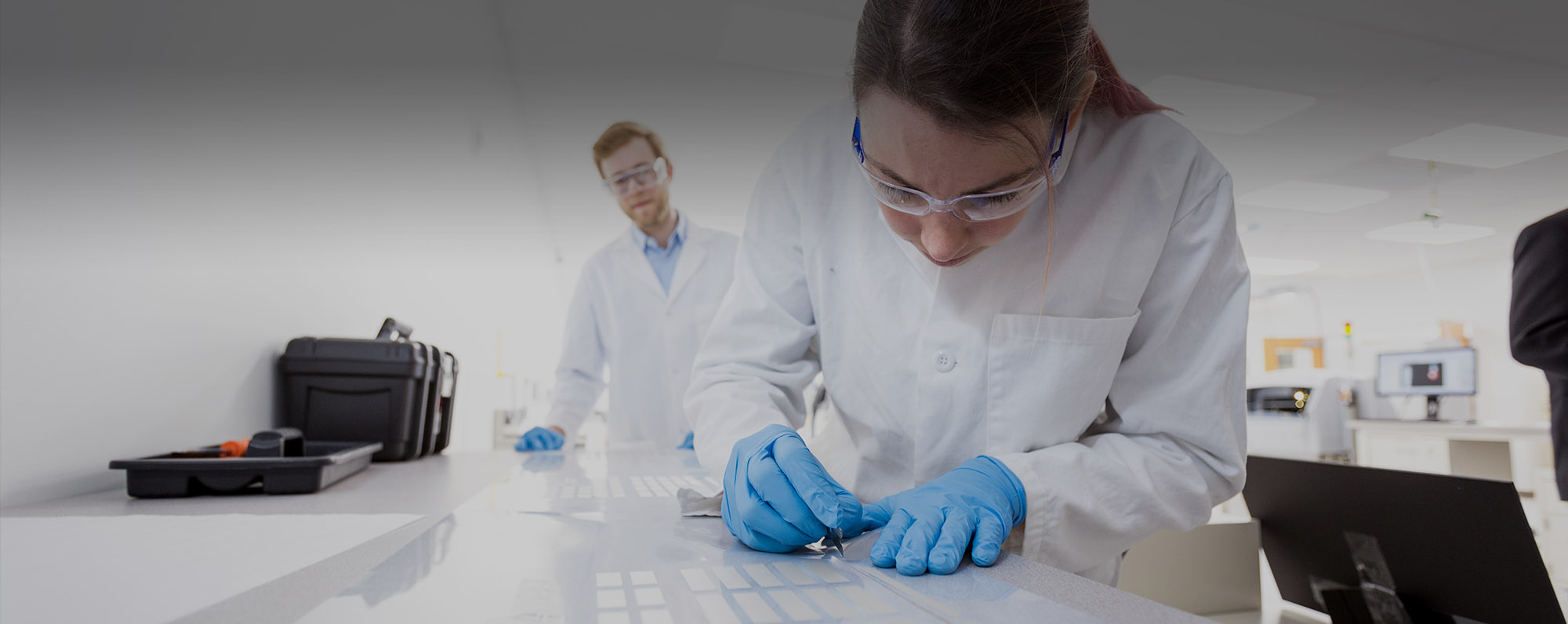
SEATTLE, September 3, 2026 — The West Coast’s first public, open-access lab for demonstrating emerging battery technologies at commercially relevant scales is open in Seattle. The new lab at the Washington Clean Energy Testbeds enables industry users and academic researchers to produce batches of prototype pouch cells—a versatile battery format for consumer electronics, electric transportation, and beyond—on a pay-per-use basis. The pouch cells can support lithium-ion components as well as new chemistries for batteries that charge faster, hold more energy, and use abundant and earth-friendly materials. Pilot-scale production of industry-format cells is an essential step for innovators to attract funding and scale next-generation technologies that can secure a globally competitive U.S. battery supply chain.
“Our new pouch cell lab makes the Testbeds the first public facility on the West Coast, and one of just a few in the U.S., where innovators and trainees can work side-by-side with staff to demonstrate novel battery materials at the scale that industry requires for investment,” said Daniel T. Schwartz, University of Washington (UW) Boeing-Sutter Professor of Chemical Engineering and founding director of the Clean Energy Institute (CEI) which operates the Testbeds. “By providing truly open access to state-of-the-art equipment with support from our expert research scientists, we’re filling a critical gap between research labs and commercial battery manufacturing in the domestic supply chain. The new battery chemistries being developed here will unlock new markets, from land, water, and air transportation to next-generation consumer electronics, defense technologies, satellites, data centers, and more resilient power grids.”

CEI opened the Testbeds near the UW campus in 2017 to provide customized training and open access to advanced capabilities for fabricating prototypes, testing devices and modules, and integrating power systems. The standard industry user engagement includes zero intellectual property entanglement with the UW and a non-disclosure agreement, accelerating the pace that ideas get turned into market-ready products.
The 1,600-square-foot Testbeds expansion for batteries was funded by a $7.5 million capital investment from Washington state via the Climate Commitment Act and was completed in February.
“I’m proud that the UW has created this incredible resource to accelerate ideas into climate technologies that benefit society,” said UW President Robert J. Jones. “We’re grateful for the support of the state and CEI’s partners in designing and building our new battery innovation lab.”
The Testbeds consulted a committee of battery technology leaders to help design the lab. Members of the committee included battery researchers from the UW and Pacific Northwest National Laboratory, as well as research and development teams from Group14 Technologies, PACCAR, Evolectric, and other companies.
“We’re delighted to see the Washington Clean Energy Testbeds add pilot-scale battery fabrication to their capabilities,” said Rick Luebbe, co-founder and CEO of Group14 Technologies. “From day one, we’ve advocated for open-access cell prototyping because it accelerates the path from breakthrough material to commercial deployment. Having this level of infrastructure right here in Washington ensures local companies can validate their products in realistic cell configurations and compete on a global stage.”
The standard-size pouch cell at the Testbeds can hold up to 10 amp-hours of charge (two to three times the capacity of a typical smartphone battery), a key specification for battery developers moving from the lab toward commercial production.
Emerald Battery Labs, a Seattle-based startup developing sodium-ion battery materials and systems for transportation, grid and data center applications, made their first pouch cells in the new lab.
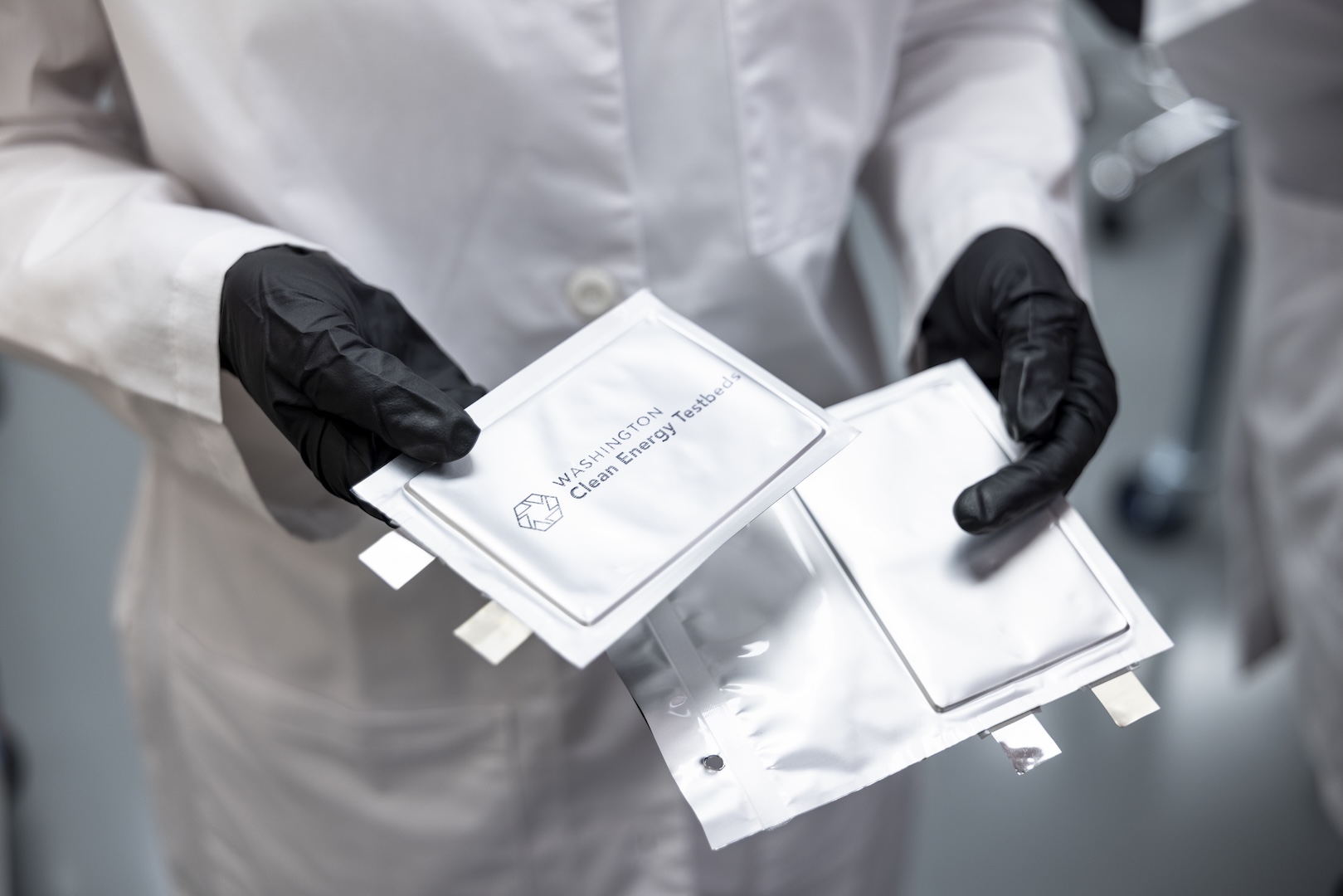
“We wouldn’t have started this company in Seattle if not for the Testbeds,” said Kjell Schroder, co-founder and CTO of Emerald Battery Labs. “The ability to test and validate our sodium battery at industrially relevant scales is essential to our growth. The Testbeds facility is a key part of our core value proposition to investors: that we can continue to iterate, innovate, and produce batches of demo cells for a range of potential applications without major capital expenditure.”
Other industry users of the new battery lab include Project K Energy, Inc., a California-based startup developing potassium-ion batteries, as well as other U.S. startups and major global corporations developing emerging battery chemistries and emerging battery applications.
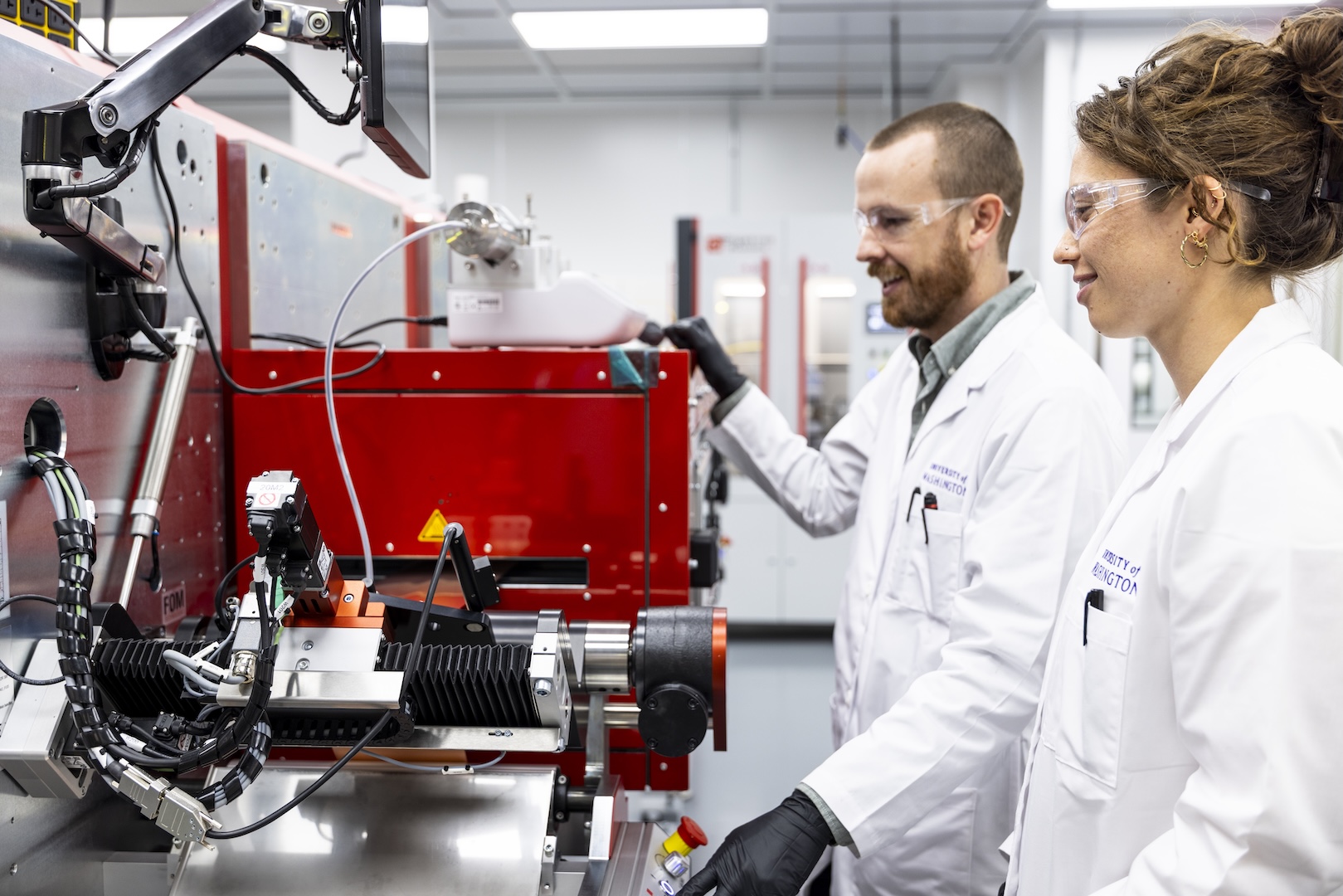
The battery prototyping lab includes a dry room (-40ºC dew point) with tools for mixing electrode slurries, coating electrodes, and the multi-step process of assembling the different components inside a plastic-lined aluminum pouch; as well as an ambient room with battery cyclers and a glove box for storing battery materials.
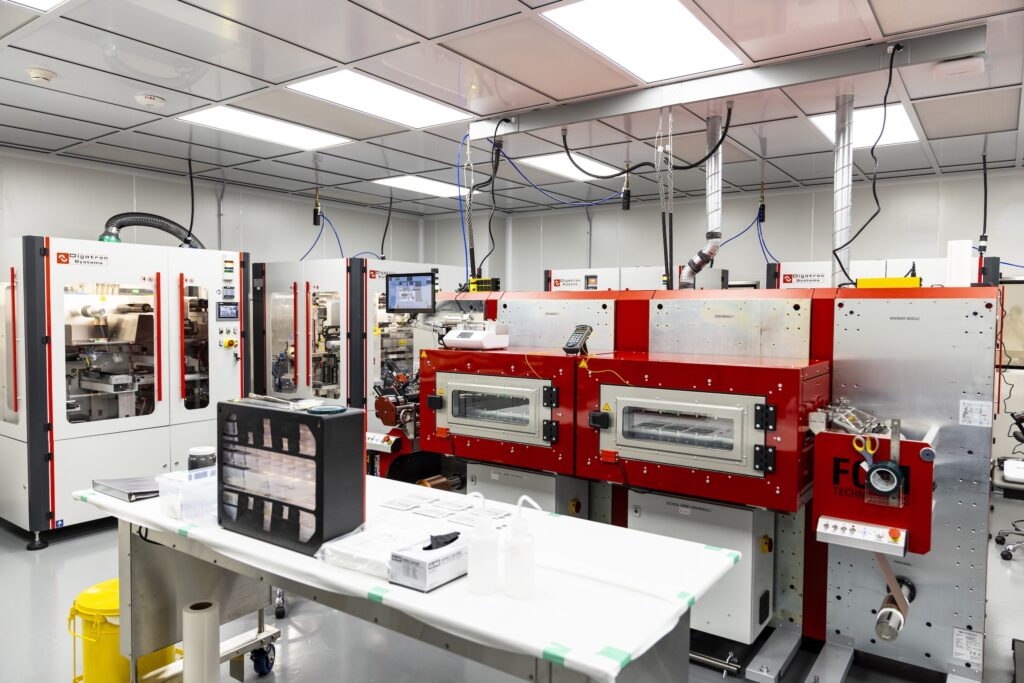
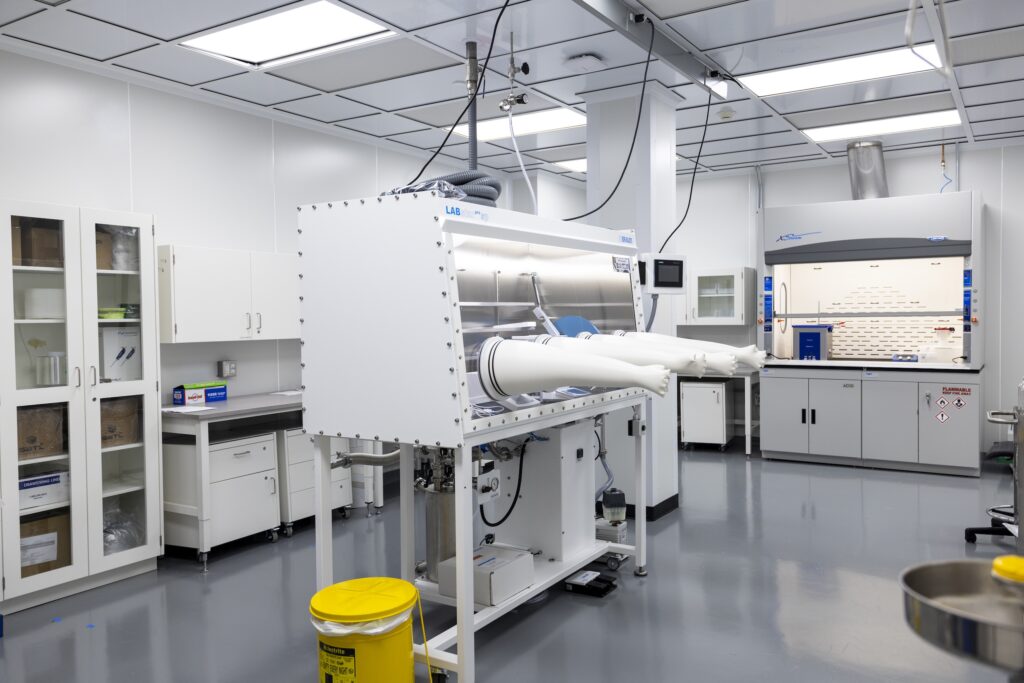
Testbeds staff scientists provide hands-on support to users, including tailoring project scopes, optimizing processes and operating specialized equipment. Through a remote user program, Testbeds staff scientists can work on behalf of innovators to advance pouch cell battery research and development projects towards specific goals.
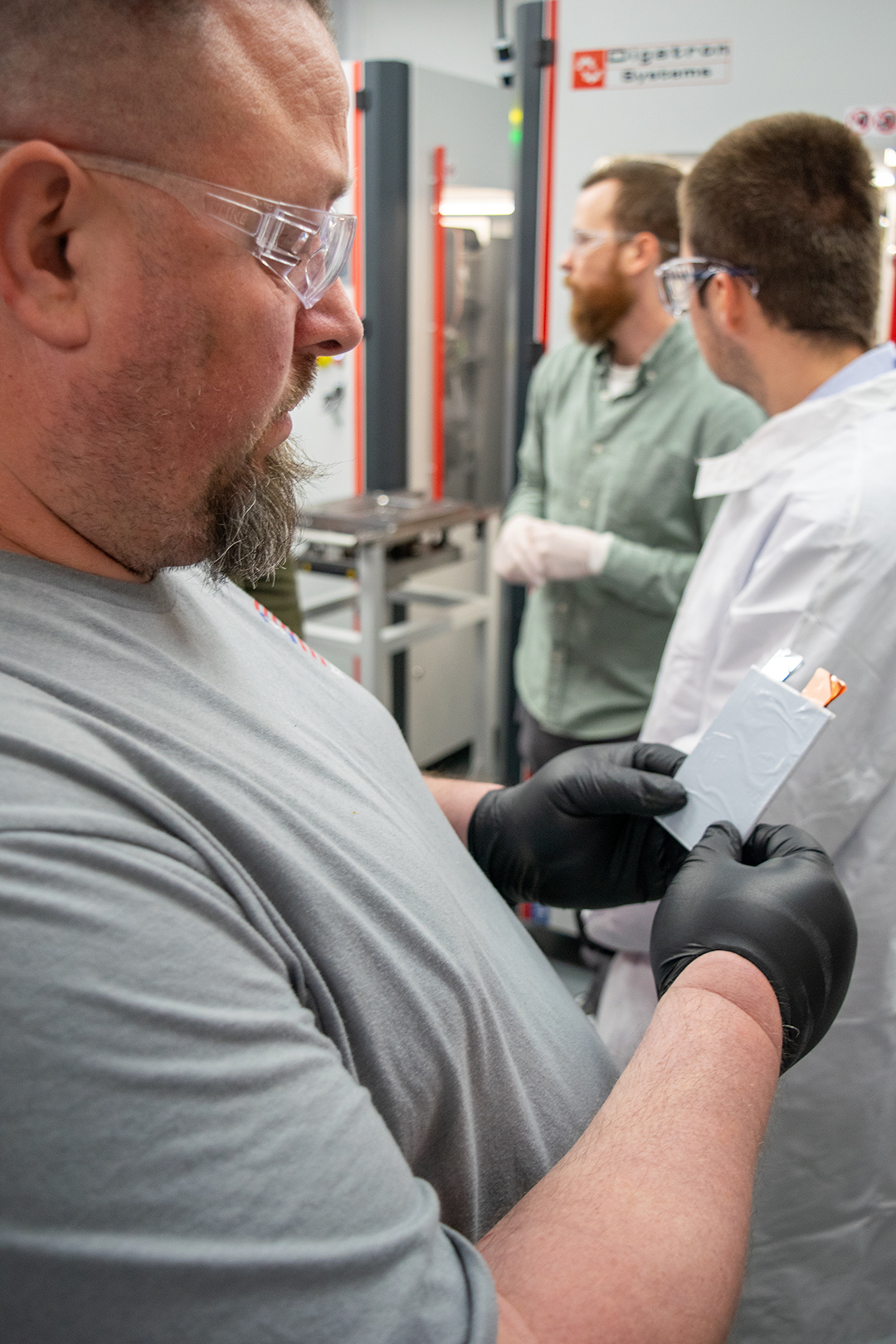
The Testbeds also partners with companies and other academic institutions to offer hands-on battery fabrication workshops in the new lab. In April, the Testbeds hosted students from Big Bend Community College in Moses Lake, Washington for a one-day workshop with another planned for later this year. U.S. battery sector leaders Group14 and Sila Nanotechnologies (based in California) are manufacturing advanced silicon anode materials in Moses Lake.
“The new lab at the Testbeds is transforming how students start careers in the battery sector,” said Dr. Sara Thompson Tweedy, president of Big Bend Community College. “Through hands-on workshops at the Testbeds, Big Bend students learn about the battery materials being made in the Columbia Basin and how to make commercial cells. This kind of education prepares them for job opportunities with production facilities, data centers and battery end-user companies, or even empowers them to start their own businesses.”
The Big Bend workshops are funded by the Clean Energy Entrepreneur Cluster, a collaborative initiative led by E8 Angels, CleanTech Alliance, Latino Founders, and the Testbeds focused on accelerating early-stage clean energy innovation. The Clean Energy Entrepreneur Cluster is part of the Washington State Department of Commerce Innovation Cluster Accelerator Program (ICAP), which is supported with funding from Washington’s Climate Commitment Act.
Additionally, the new lab at the Testbeds enhances UW research and training opportunities such as the M.S. degree program in Chemical Engineering. Master’s students can elect a Battery Engineering focus to take advanced battery courses along with the graduate-level chemical engineering curriculum, with the one-year program (three academic quarters) culminating in a hands-on capstone project involving pouch cell fabrication training at the Testbeds.
Images are available for download here.
Media Contact:
Suzanne Offen
UW Clean Energy Institute
(240) 620-5207
soffen@uw.edu
###
University of Washington Clean Energy Institute (CEI)
CEI’s mission is to accelerate a scalable and equitable clean energy future that will improve the health and economy of our state, nation, and world. To accomplish this, it supports the advancement of next-generation solar energy and battery materials and devices, as well as their integration with systems and the grid. The Institute creates the ideas and educates the people needed to generate these innovations, while facilitating the pathways to bring them to market. www.cei.washington.edu
Washington Clean Energy Testbeds
CEI created the Washington Clean Energy Testbeds to accelerate the development, scale-up, and adoption of new clean energy and climate technologies. This open-access lab facility in Seattle, founded on the principle that users retain all intellectual property, offers customized training and use of instruments for fabricating prototypes, testing devices and modules, and integrating power systems. The facility also houses meeting and office space where users from academia and business work and collaborate. www.wcet.washington.edu

